
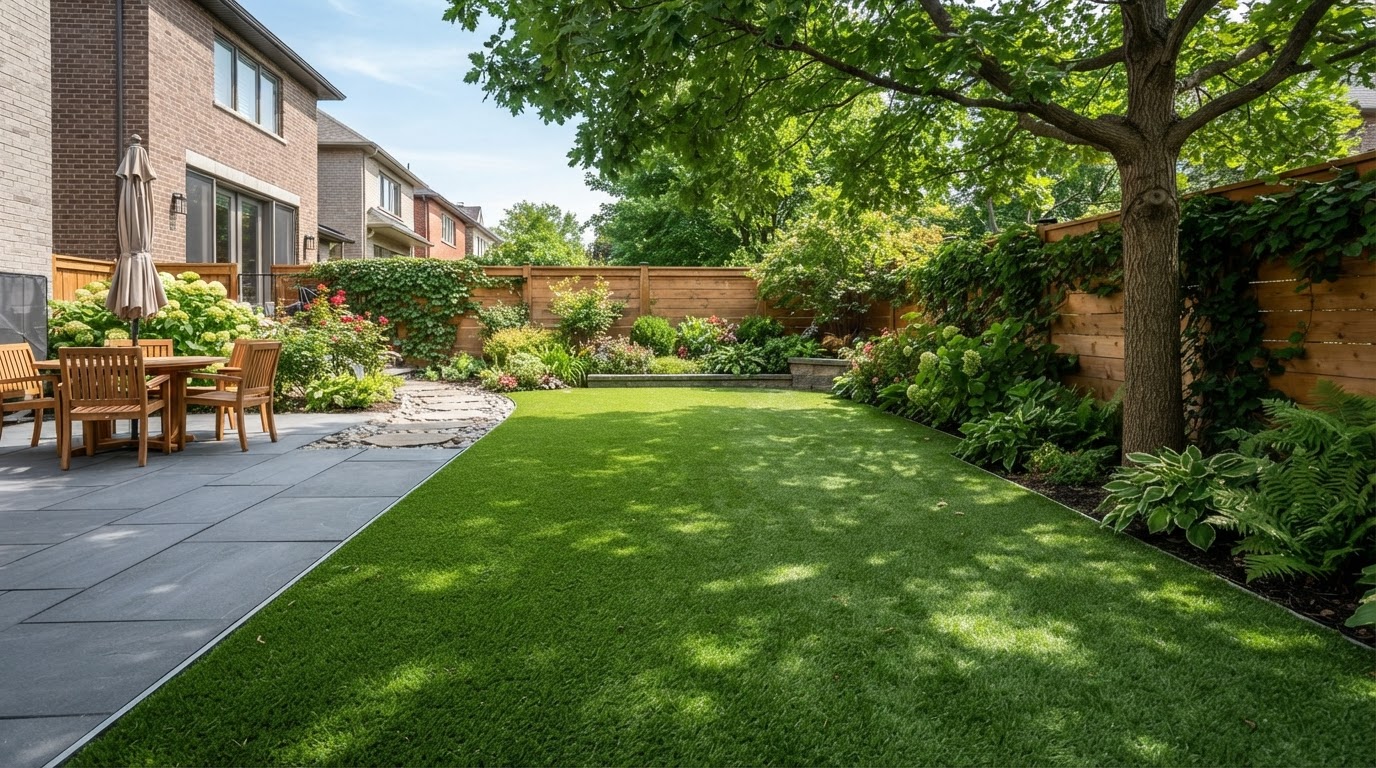
Artificial Turf for Shade & Dog Areas Spring
Artificial turf can solve specific problems — a shaded patch where grass won't establish, a dog area that turns muddy, a high-use backyard section — but it comes with real tradeoffs in heat, drainage, cleaning, and upkeep. Heritage helps Spring homeowners weigh those tradeoffs honestly and plan an installation suited to the actual site.
Artificial Turf for Dog Runs and Shade Near Spring
Artificial turf is considered for specific applications where natural grass struggles — but each application has its own drainage, cleaning, and material considerations that have to be planned for the site.
Pet areas
- Drainage
- Pet waste removal
- Cleaning access
- Odor-management considerations
- Surface wear
- Appropriate infill and backing evaluation
Shaded areas
- Persistent moisture
- Drainage underneath the turf
- Debris accumulation
- Transition to planting beds
- Existing trees and roots
High-use areas
- Traffic patterns
- Surface durability
- Edging
- Access
- Maintenance requirements
Artificial Turf Versus Natural Grass in Spring
Artificial turf and natural grass each have advantages and limitations. Comparing them honestly — appearance, mowing, establishment, cleaning, drainage, surface temperature, upfront cost, long-term upkeep, pet use, and replacement — helps match the right surface to the actual use.
Advantages and limitations presented honestly. No claim that artificial turf is always cool, odor-free, pet-safe in every condition, or maintenance-free.
Planning an Artificial Turf Installation Near Spring
A turf installation is planned around the intended use, the existing grades and drainage, the roots and utilities underneath, and the base preparation the site requires — so the surface drains, holds up, and cleans the way it should rather than pooling or shifting after install.
Specialized turf installation methods are confirmed against actual capability before being recommended — not every installation approach suits every site.
Important Artificial Turf Considerations in Spring
Artificial turf has real considerations that affect how it performs — surface heat in direct sun, pet-waste cleaning, drainage, debris accumulation, and ongoing inspection. Understanding these up front keeps the installation usable rather than disappointing.
What Shapes an Artificial Turf Estimate
- Square footage
- Existing surface removal
- Excavation and base preparation
- Drainage improvements
- Turf material
- Infill
- Edging
- Access
- Pet-use requirements
No guaranteed temperature reductions, permanent odor elimination, or universal product safety. Estimates follow the actual site and intended use.
Artificial Turf Questions in Spring
Explore Artificial Turf for Your Property Near Spring
Tell us about your backyard — the approximate square footage, pet use, shade, and drainage concerns — along with photos taken safely from the ground. We review each inquiry by the actual site conditions before discussing whether artificial turf suits the intended use.
Request an Artificial Turf Estimate
Required: name, contact details, project address, desired timeline, and a photo you can take safely from the ground.