
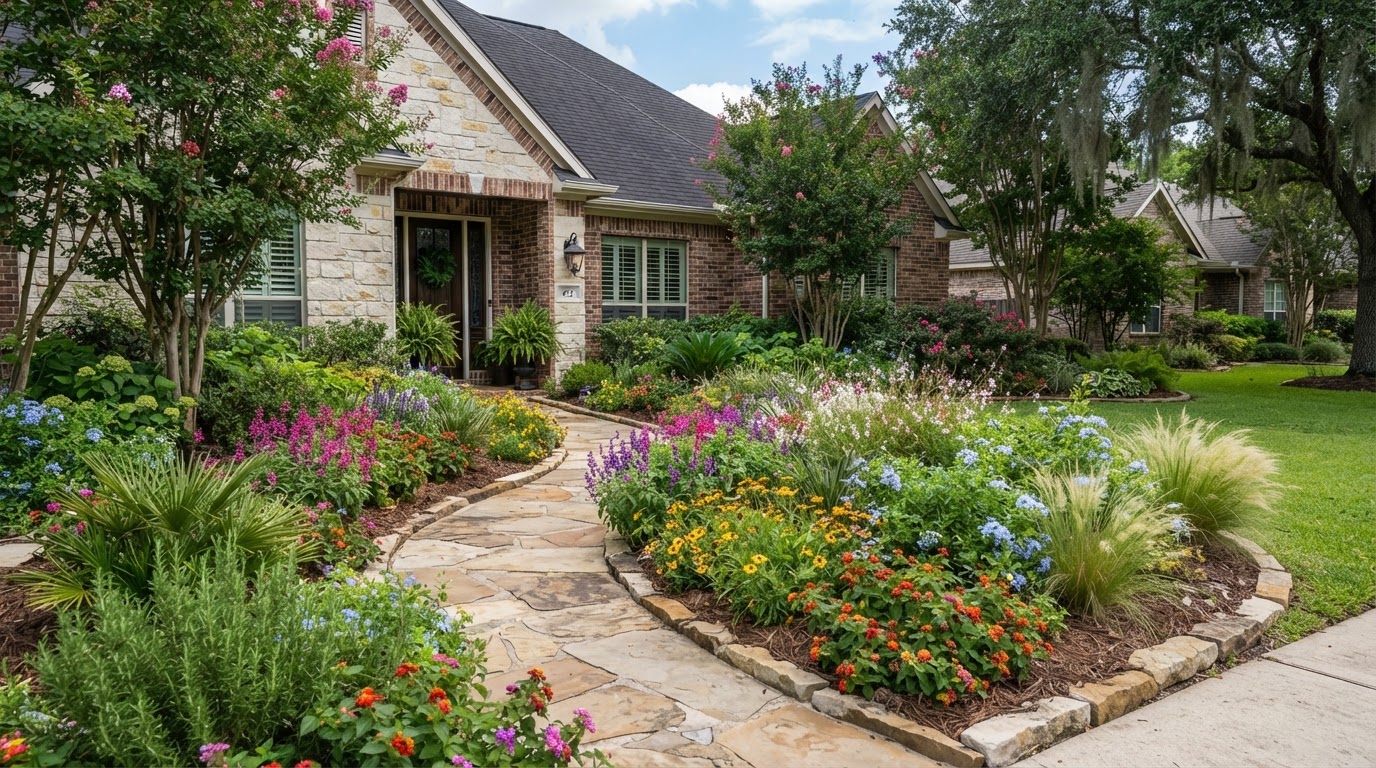
Seasonal Color & Flower Installation Spring
Seasonal color is the planned use of suitable ornamental flowers and plantings to complement a landscape during the periods when those plants perform well. It adds blooms and color to beds at the right points in the year rather than promising year-round flowers from a single planting. In Southeast Texas, heat, intense rainfall, and occasional freezes all shape which flowers suit which season, so selection follows the actual conditions — sun and shade, temperature, soil, drainage, and irrigation — and the look you want.
Seasonal Flower and Color Options in Spring
Seasonal color is planned around the bed, the season, and the plants that suit them. The options below show how selection and design come together.
Front Yard Flower Beds
Seasonal plantings near entrances, walkways, and foundation beds add color where it's most visible. Flowers are selected to suit the bed's sun, soil, and drainage so the color lasts through the intended season rather than fading quickly.
Backyard and Garden Color
Flower arrangements for patios, seating areas, and garden spaces bring color to where you spend time. Placement follows how the space is used and the existing plantings so the new color complements rather than competes with what's already there.
Seasonal Annuals and Suitable Perennials
Seasonal annuals provide concentrated color for a defined period and are rotated as the season changes; suitable perennials return over more than one year with the right care. Each suits different goals, and the choice follows the bed, the season, and the maintenance you want.
Color Combinations and Planting Design
Color coordination, mature size, bed layout, sun exposure, planting density, existing shrubs, and maintenance needs all shape the design. The plan brings these together so the finished bed looks intentional and stays manageable through the season.
Existing Landscape Integration
Seasonal color can complement established plants without requiring an entire landscape redesign. New flowers are worked into existing beds around shrubs and perennials, refreshing the look while keeping the landscape's structure intact.
Planning Seasonal Flower Installation Near Spring
Flowers are selected by matching the plant's needs to the actual site. The factors below shape how the installation is planned.
Choosing Plants for Actual Site Conditions
Plant suitability varies by season, species, exposure, and water needs. A flower that thrives in spring sun may not survive a Southeast Texas summer, and a shade-loving plant can scorch in full sun. Selection matches the plant to the bed's actual conditions so the color lasts rather than fading in the first heat or cold snap.
Preparing Landscape Beds
Beds are prepared to suit the new plantings and integrated with existing plants and groundcover. Preparation may include clearing debris, refreshing mulch or groundcover, reviewing edges, and checking soil and drainage so the flowers go in ready to establish. The work follows the bed's current condition rather than a one-size routine.
Seasonal Weather Limitations
Heat, intense rainfall, and occasional freezing temperatures all influence which flowers thrive at different points in the year. Plant survival isn't guaranteed through every weather event — a hard freeze can damage plants that aren't cold-hardy, and sustained heat can stress flowers that suit cooler months. Selection accounts for the likely conditions, and the plan adjusts as the season changes.
Maintaining Seasonal Landscape Color in Spring
Seasonal flowers need ongoing care through their growing period. The factors below show what's involved and what shapes an installation estimate.
Planning for Color Changes
Seasonal planting changes as conditions and plant suitability change. Annuals are rotated when their flowering period ends, and beds may be refreshed with the next suitable set of flowers for the coming season. Continuous flowering under all weather conditions isn't guaranteed — color follows the season and the plants that suit it, so the plan is built around realistic expectations for each part of the year.
What Affects Seasonal Flower Installation Cost?
- Bed area
- Plant selection
- Quantity of plants
- Soil preparation
- Existing landscaping
- Irrigation
- Site access
- Replacement frequency
- Maintenance scope
Because these depend on the specific beds and the season, an on-site review produces the most useful number rather than a flat per-flat rate. No flower installation guarantees continuous bloom — plants follow their season and conditions.
Seasonal Flower Installation Questions in Spring
Discuss Seasonal Flower Installation Near Spring
Tell us about your beds — their size, sun and shade, and the color or season you have in mind — along with a few photos taken safely from the ground. We review each inquiry by location and scope before discussing plant selection and an appropriate installation plan.
Related Services
- Landscape Design
- Landscape Installation
- Front Yard Landscaping
- Landscape Bed Maintenance
- Mulch Installation
- Pine Straw Installation
- Commercial Seasonal Color Programs
Request Seasonal Flower Installation
Required: name, contact details, project address, desired timeline, and a photo you can take safely from the ground.