
Lawn Mowing & Edging Spring
Routine mowing and edging keep a lawn at an appropriate height and its boundaries crisp — maintaining grass height, defining where turf meets walks and beds, and supporting a tidy property appearance. The right cut follows the grass species, its growth, and the conditions on the property, and the schedule shifts with how the turf is actually growing through the year rather than a rigid interval applied regardless of season.
Residential Lawn Mowing and Edging in Spring
Mowing and edging are the routine services that keep a lawn's surface and borders looking maintained. Each part follows the turf and the property's features rather than a single routine applied the same way to every yard.
Lawn Mowing
Mowing cuts the grass across the lawn surface to an appropriate height for the turf species and the property's appearance. Cutting practices follow the grass type, its growth, and current conditions — not a single setting applied to every lawn — so the turf stays healthy rather than stressed by the wrong cut.
Sidewalk and Driveway Edging
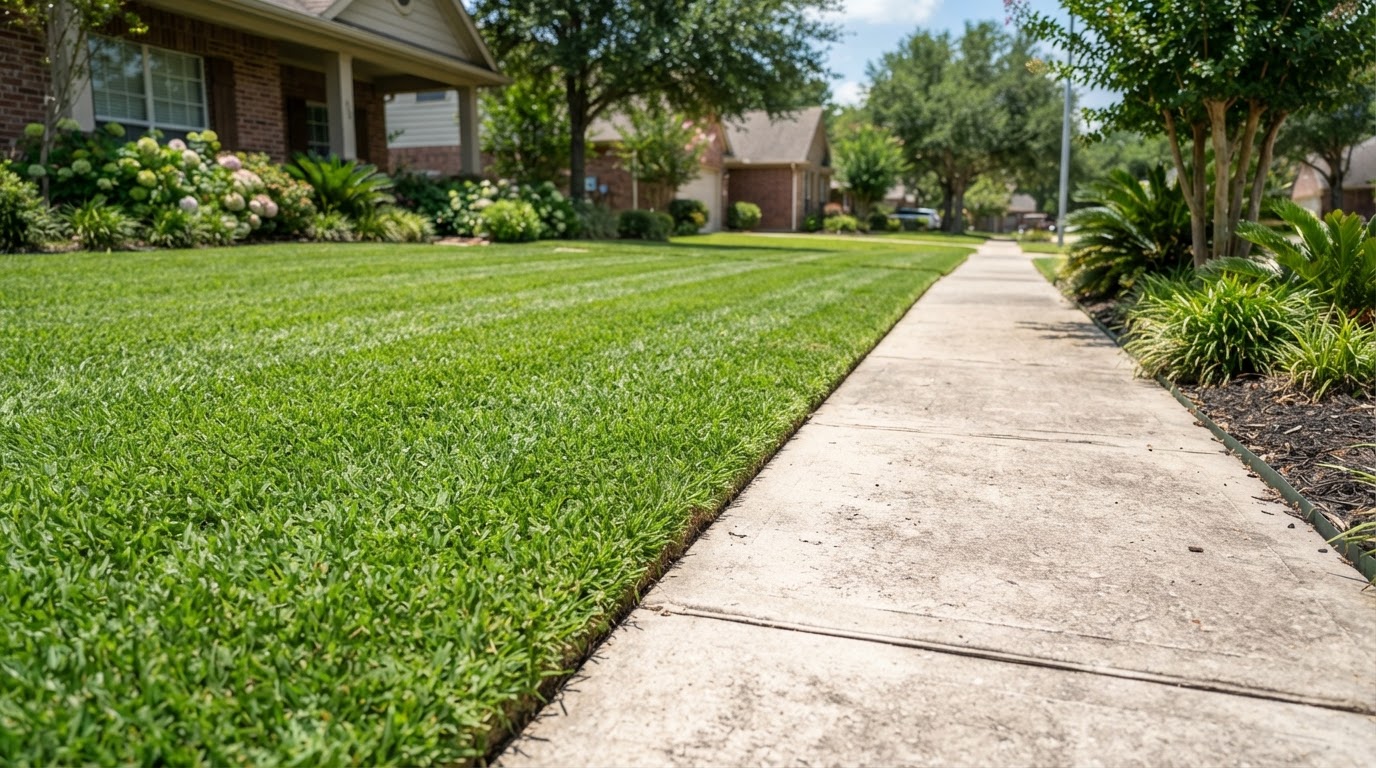
Edging defines the clean line where turf meets sidewalks, driveways, patios, walkways, and other hard surfaces. Keeping that boundary crisp prevents grass from creeping onto paved surfaces and gives the lawn a finished edge where it meets the hardscape around the property.
Landscape Bed Boundaries
Edge management around planting beds keeps the border between lawn and beds defined while avoiding damage to plants, irrigation components, and existing edging. The edge follows the bed's layout and the materials already in place rather than cutting blindly along the bed line.
Grass Clippings and Site Presentation
Clipping and cleanup considerations follow the property and the service — whether clippings are left to return nutrients to the lawn, collected, or cleared from walks and patios. The approach is matched to the property rather than a universal removal policy applied to every cut.
Obstacles and Property Features
Mowing around trees, planting beds, fixtures, structures, and tight access requires care and shapes how the service is planned. Obstacles and access limitations are reviewed as part of the estimate so the scope reflects the actual property rather than an open, obstacle-free lawn.
Planning Lawn Mowing Near Spring
How a lawn is mowed follows the turf growing on it and the conditions around it. The factors below shape mowing height, frequency, and how the service is planned for the property.
Mowing Height and Turf Health
Suitable cutting height depends on the turfgrass species and its condition. St. Augustine, zoysia, and Bermuda each have different recommended heights, and mowing too low stresses the turf while mowing too high can encourage thatch or disease in some species. The right height follows the grass on your lawn rather than one universal setting for every property.
Seasonal Growth and Frequency
Frequency changes with rainfall, temperature, and turf growth. Warm-season grasses grow fastest in warm, wet conditions and may need more frequent cutting in spring and summer, then less in cooler or drier periods. The schedule follows the grass's actual growth rather than a rigid year-round interval — and no mowing service guarantees a specific appointment window without an agreement.
Keeping Spring Lawns Presentable Through the Growing Season
Routine mowing is one part of keeping a property maintained. The differences below show how mowing fits alongside other services and what shapes a mowing estimate.
Routine Mowing
Regular cuts at an appropriate height keep the lawn tidy through active growth.
Overgrown Lawn Recovery
A neglected lawn may need gradual height reduction and cleanup before routine mowing resumes.
Seasonal Cleanup
Leaves and debris are cleared so the lawn stays presentable between cuts.
Broader Lawn Care
Mowing is one component; turf health, irrigation, and soil concerns are addressed separately.
Mowing Around Landscaping
Trees, planting beds, fences, gates, slopes, and tight spaces all influence how a property is mowed and how long the service takes. Narrow gates limit equipment access; slopes affect safety and approach. These features are reviewed as part of the estimate so the scope reflects the actual property rather than an open, obstacle-free lawn.
What Affects Lawn Mowing Cost Near Spring?
- Lawn area and square footage
- Terrain and slopes
- Obstacles and landscape features
- Edging requirements
- Site access for equipment
- Current grass height
- Desired service frequency
- Cleanup and debris needs
Because these depend on the specific property, an on-site review or clear photos produce the most useful estimate rather than a flat per-cut rate. No mowing service guarantees a fixed schedule without an agreed arrangement.
Lawn Mowing and Edging Questions in Spring
Discuss Lawn Mowing and Edging Near Spring
Tell us about your lawn — its size, any obstacles or access considerations, and how often you'd like it maintained. We review each inquiry by location and scope before discussing an appropriate mowing arrangement.
Related Services
- Lawn Care
- Lawn Maintenance Plans
- Landscape Bed Maintenance
- Spring & Fall Cleanups
- Overgrown Yard Cleanup & Restoration
- St. Augustine Mowing Frequency
Request Lawn Mowing Information
Required: name, contact details, project address, desired timeline, and a photo you can take safely from the ground.