
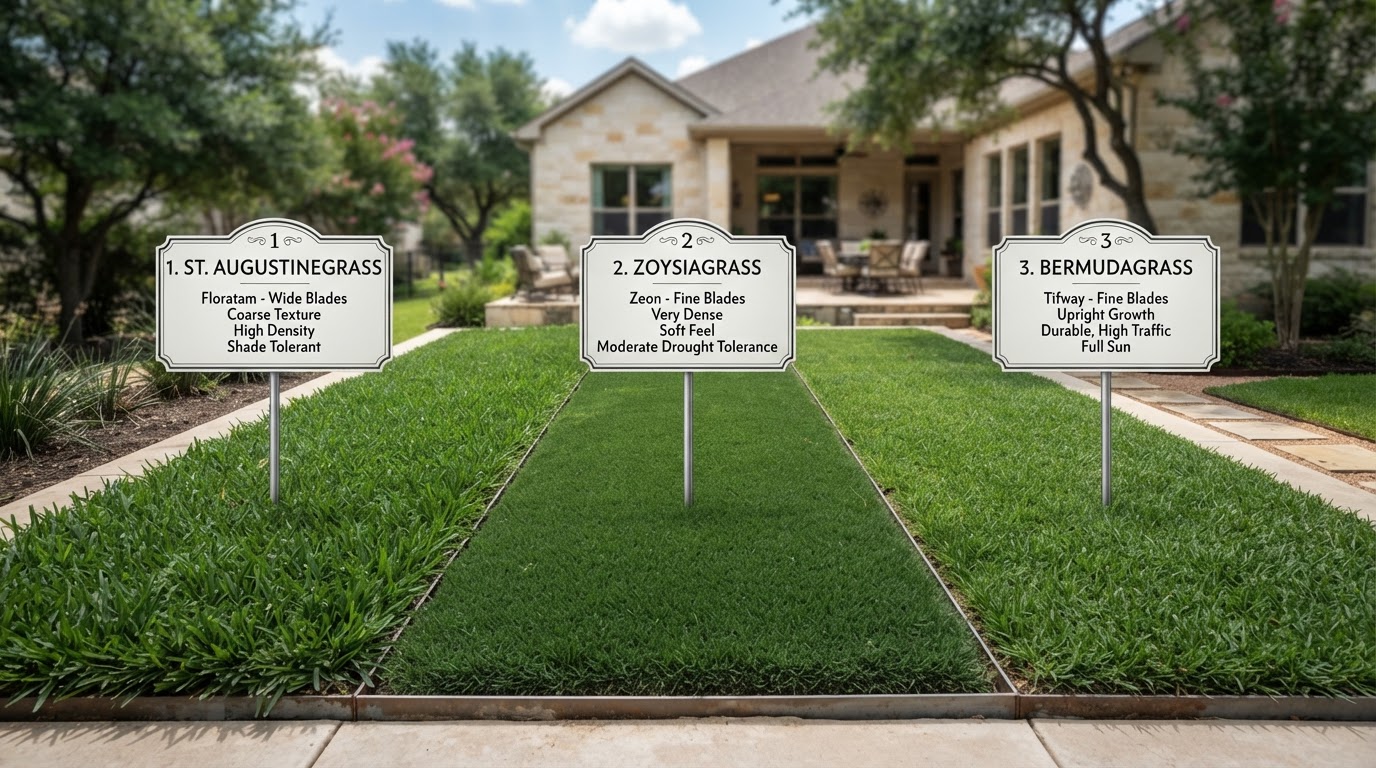
St. Augustine vs. Zoysia vs. Bermuda Spring
St. Augustinegrass, zoysiagrass, and Bermudagrass each have different strengths and maintenance requirements, and the best choice depends on the property conditions, the cultivar selection, the desired appearance, the sunlight, the usage, the irrigation, and the upkeep. No single grass is universally superior — Heritage helps Spring homeowners compare the three against the actual yard rather than recommend one by default.
St. Augustine, Zoysia and Bermuda Differences Near Spring
The table below compares the three warm-season grasses across the factors that most often shape a Spring-area lawn decision. Each cell reflects species-specific characteristics and the real site conditions rather than a blanket ranking — the right grass is the one matched to the actual sunlight, soil, and use.
| Factor | St. Augustine | Zoysia | Bermuda |
|---|---|---|---|
| Typical appearance | Coarse, broad-bladed texture; common residential look | Fine to medium texture; dense, carpet-like stand | Fine texture; aggressive, dense growth in full sun |
| Shade suitability | Depends on cultivar and available light; some partial-shade tolerance | Depends on cultivar and light; filtered shade in some cultivars | Generally more sun-demanding; thins in shade |
| Traffic tolerance | Site- and cultivar-dependent; generally lower traffic tolerance | Site- and cultivar-dependent; moderate to good density under traffic | Often suited to higher-use sunny areas; recovers quickly from wear |
| Mowing | Species-specific height; regular mowing during the growing season | Species-specific height; often less frequent mowing once established | Species-specific height; frequent mowing to maintain density |
| Irrigation | Depends on soil, season, and establishment; regular watering in heat | Depends on soil, season, and establishment; often lower demand once established | Depends on soil, season, and establishment; tolerates heat in full sun |
| Establishment | Confirm appropriate methods; commonly installed as sod | Confirm appropriate methods; slower to establish than Bermuda | Confirm appropriate methods; establishes quickly from sod or other methods |
Which Grass Fits Different Yard Conditions in Spring?
Practical scenarios where the right grass depends on the actual conditions:
Recommendations remain conditional — no single grass is universally the cheapest, easiest, most drought-proof, or most shade-tolerant across every Spring property.
Understanding Turfgrass Characteristics Near Spring
Each grass has its own texture, growth habit, shade response, and upkeep. The summaries below draw on current Texas A&M AgriLife publications on turfgrass selection, St. Augustinegrass management, zoysiagrass management, and Bermudagrass management — they inform the comparison rather than name a single best grass.
St. Augustinegrass
- Visual texture and broad blades
- Growth characteristics
- Cultivar selection
- Shade response
- Mowing and irrigation
- Common lawn stressors
Zoysiagrass
- Visual appearance and density
- Cultivar variation
- Shade response
- Establishment
- Maintenance requirements
Bermudagrass
- Sunlight needs
- Growth and recovery characteristics
- Traffic considerations
- Mowing requirements
- Establishment options
- Limitations in shaded conditions
Choosing Grass for Your Property in Spring
A turf selection follows a sequence — evaluating the sunlight, considering the soil and drainage, identifying the intended lawn use, reviewing the irrigation, comparing the mowing expectations, evaluating the establishment methods, considering the seasonal stress, reviewing the suitable cultivars, and planning the installation and establishment care. No single grass is universally the cheapest, easiest, most drought-proof, or most shade-tolerant across every property.
Turfgrass guidance here draws on Texas A&M AgriLife Extension publications on turfgrass selection for Texas, St. Augustinegrass lawn management, zoysiagrass lawn management, and Bermudagrass home-lawn management. These sources inform the comparison — they do not guarantee any turf will thrive on every property or that one grass is universally superior.
Turfgrass Comparison Questions in Spring
Compare Lawn Installation Options Near Spring
Tell us about your lawn — the property address, the current grass, the daily sunlight, the intended use, and a photo taken safely from the ground — and we review each inquiry by the actual site conditions before discussing a suitable turf selection and installation plan.
Tell Us About Your Lawn
Required: name, contact details, project address, desired timeline, and a photo you can take safely from the ground.