
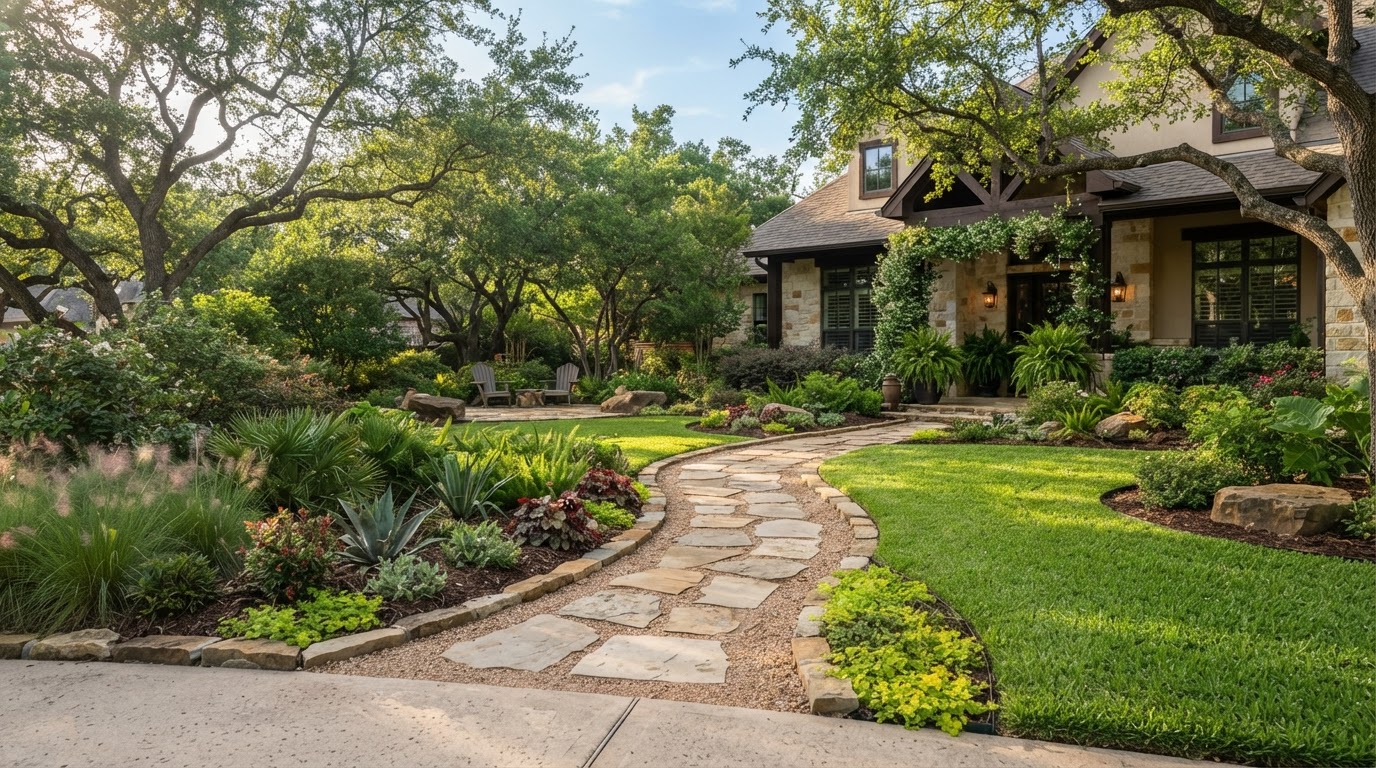
Landscape Design Spring
Landscape design helps organize your outdoor space around the property's layout, existing conditions, the features you want, and the maintenance you're willing to take on. Whether you're planning a new landscape or refining an established yard, Heritage designs around how the space will actually be used — not a one-size-fits-all template.
Landscape Design Options for Properties in Spring
Design decisions can apply across the whole property or focus on a single area — front yards, backyards, planting beds, entry landscapes, outdoor living spaces, walkways, lighting, irrigation, privacy planting, shade-tolerant areas, or low-maintenance layouts. The right scope depends on your property and goals, not a fixed package.
Planting Layouts & Beds
Bed configuration, plant layering, spacing for mature size, and seasonal appearance planned around how the space is used.
Front & Backyard Layouts
Entry landscapes, backyard living areas, and circulation between lawn, beds, and outdoor features designed as one property.
Designing Around Existing Features
Mature trees, established lawns, driveways, and structures are worked into the design rather than removed by default.
Shade & Sun Exposure
Light conditions across the yard shape turf and plant choices, so design follows the actual sun and shade on site.
Drainage & Irrigation Planning
Water movement and coverage are considered during design so planting and features hold up over time.
Low-Maintenance Options
Simplified layouts and suitable plant selection can reduce routine upkeep without promising a maintenance-free yard.
Planting Layouts and Landscape Composition
Composition considers plant height and spacing, layered beds, seasonal appearance, and mature plant size. A bed that looks full in year one can become overcrowded by year three if mature size isn't accounted for, so layout is planned for the long term rather than the install day.
Sunlight and available growing space shape which plants suit each area. A full-sun bed and a filtered-shade bed in the same yard may need very different selections, and the design accounts for that rather than repeating one palette across the property.
Hardscape and Outdoor Living Integration
Pathways, patios, retaining walls, pergolas, and other constructed features are considered during landscape planning so they relate to planting, drainage, and outdoor use rather than being added later. Coordinated design helps circulation, grade transitions, and water movement work together.
When hardscape and softscape are planned together, the finished space tends to function better and require fewer corrections. Each element still depends on site conditions and any applicable approvals, which are reviewed during planning.
Designing Around Existing Features
Mature trees, existing lawns, driveways, structures, and usable outdoor space are part of the design. An established landscape rarely needs to be demolished to be improved — many projects refine what's already working and replace only what isn't.
Working with existing features also protects established trees and root zones, which can be damaged by unnecessary grading or construction. The design accounts for what's worth keeping before planning what to change.
Planning a Landscape Design Near Spring
A practical design process moves from understanding the property to defining the goals, then matching improvements to the actual site conditions. The considerations below shape the design before any installation begins.
Evaluating the Existing Landscape
Understanding existing conditions — soil, drainage, sun exposure, established plants, and how water moves across the yard — helps identify which improvements are practical. A design built on the actual site tends to hold up better than one that ignores it, and it avoids unnecessary removal of healthy plantings.
Creating a Cohesive Landscape Layout
A cohesive layout considers proportion, movement through the space, planting relationships, and the connections between existing and new features. The goal is a yard that reads as one intentional space rather than a collection of separate improvements added over time.
Designing for Southeast Texas Landscape Conditions
Spring-area properties sit in a climate with long hot summers, periodic heavy rain, occasional dry stretches, and the chance of a hard freeze. Design accounts for sun exposure, tree canopy, rainfall, irrigation, drainage, heat, seasonal cold, and turfgrass suitability so the landscape performs after install rather than failing in the first season.
Choosing Plants for the Right Conditions
Suitability depends on individual plant needs and the conditions on your property. A plant that thrives in full sun may struggle in filtered shade; a drought-tolerant selection may still fail in a low, wet area. There is no single universal plant list for every Spring yard — selection follows the light, soil, drainage, and maintenance you're prepared to provide.
Native and adapted plants can reduce some upkeep, but they still require suitable establishment and care. Drought tolerance does not guarantee survival without attention, and freeze tolerance depends on species and conditions.
What Affects Landscape Design Cost in Spring?
- Property size and the area being designed
- Design complexity and number of features
- Existing landscape to work around or remove
- Desired features and outdoor living scope
- Plant and material choices
- Site preparation, grading, and soil work
- Irrigation and drainage coordination
- Whether the project is phased or built at once
An estimate reflects the specific conditions of your yard rather than a single average, which is why an on-site review produces the most useful number.
Landscape Design Questions in Spring
Discuss Your Landscape Design Project Near Spring
Tell us about your property, the areas you want to improve, and the goals you have for the space. We review each inquiry by location and scope, then discuss assessment and estimate scheduling for your Spring-area landscape.
Related Services
- Landscape Installation
- Custom Landscape Design & Build
- Front Yard Landscaping
- Backyard Landscaping & Makeovers
- Hardscaping
- Landscape Design Cost
- The Landscape Design Process
Request a Landscape Design Estimate
Required: name, contact details, project address, desired timeline, and a photo you can take safely from the ground.