
Lawn Care Spring
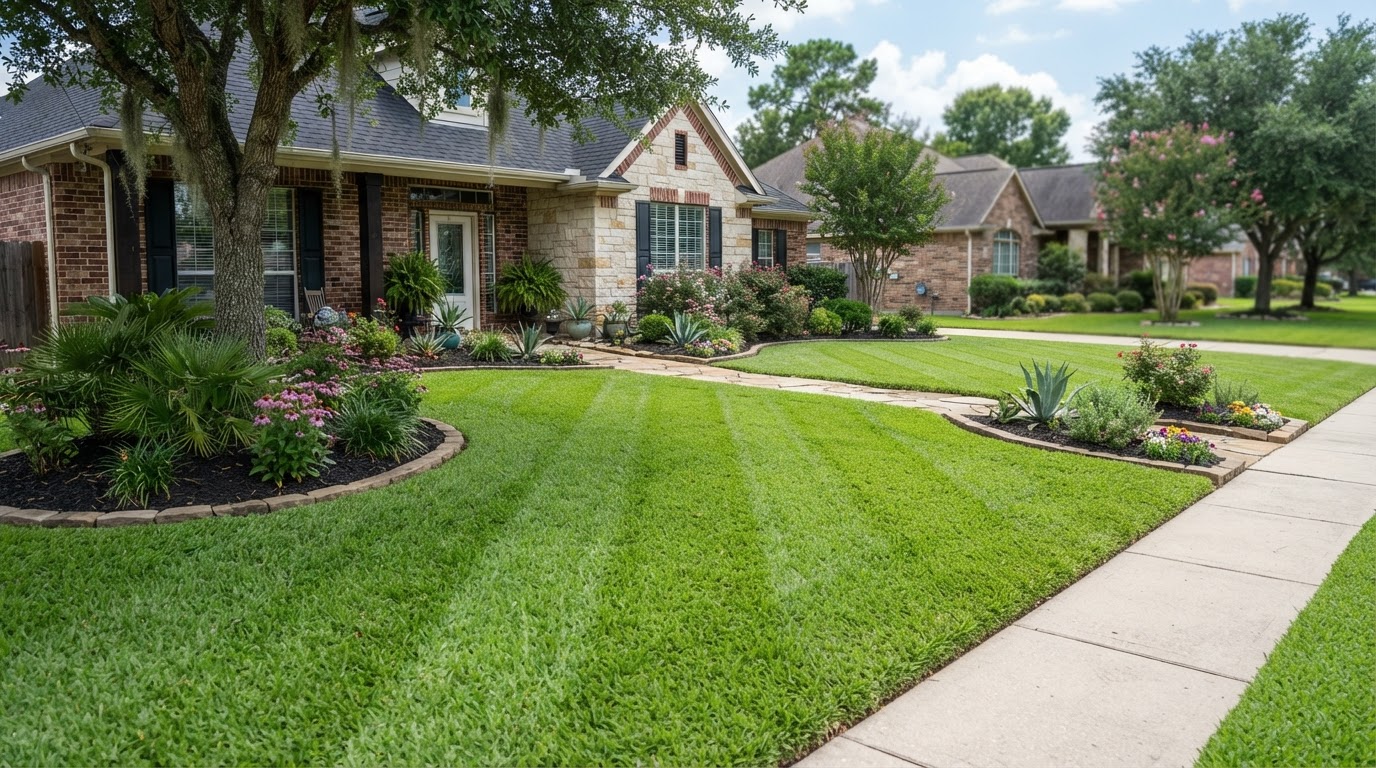
Lawn care brings together the turf maintenance, observation, seasonal adjustments, mowing practices, and irrigation considerations that keep a residential lawn healthy and presentable. The right scope follows what your property actually needs — its turfgrass type, sun exposure, soil, drainage, and the appearance you want — rather than a fixed program applied to every lawn. Southeast Texas warm-season grasses grow actively through spring and summer and slow in cooler months, so care is planned around how the turf changes through the year.
Lawn Care Services for Properties in Spring
Practical lawn care combines several components that work together to keep turf healthy and a property looking maintained. Each component follows the conditions on your lawn rather than a single routine applied the same way everywhere.
Lawn Mowing and Edging
Routine cutting and edge definition keep the lawn at an appropriate height and its boundaries crisp. Mowing practices follow the grass species, growth, and conditions on the property rather than a one-size approach, and the schedule shifts with how the turf is actually growing.
General Turf Maintenance
Turfgrass type, growth rate, weather, foot traffic, and the appearance you want all shape what the lawn needs. Maintenance is planned around the turf on your property — its species, condition, and the upkeep it actually requires — rather than a generic lawn program applied to every yard.
Fertilization and Weed Concerns
Nutrient needs and weed pressure depend on turf species, soil, and the conditions allowing weeds to establish. Assessment comes first, and any herbicide or pesticide application requires verified authorization and qualified, label-following work — ordinary lawn maintenance doesn't automatically authorize regulated treatments.
Soil and Turf Conditions
Soil compaction, drainage, shade, irrigation coverage, mowing practices, and seasonal weather all influence turf health. These are reviewed together because a lawn's condition usually reflects several interacting factors, not a single cause diagnosed from appearance alone.
Seasonal Lawn Care
Warm-season grasses in Southeast Texas grow actively through spring and summer and slow in cooler months, so lawn needs change through the year — growth, rainfall, heat, and occasional cold events all shift what the turf requires at different points in the season.
Understanding Your Lawn's Needs Near Spring
A lawn is assessed on site because its condition usually reflects several interacting factors. The review covers what's growing, where, and how — so the care plan follows the actual property rather than assumptions made from a description alone.
Evaluating Lawn Conditions
Discoloration, thinning, or poor growth can each have several possible causes — shade, water stress, soil compaction, drainage, mowing practices, nutrients, insects, or disease. Similar symptoms often have different underlying causes, which is why a lawn is assessed before any treatment is recommended rather than diagnosed from appearance alone. The review identifies what's actually affecting the turf so the response fits the problem.
Establishing Appropriate Lawn Care Priorities
Mowing, irrigation, soil concerns, and other needs are prioritized following assessment rather than applied in a fixed order. A shaded lawn, a compacted lawn, and a lawn with drainage issues each call for different attention first, so the care plan is built around what the property actually needs — and adjusted as conditions change through the year.
Maintaining Lawns Through Southeast Texas Seasons
Southeast Texas conditions shape how a lawn is maintained through the year. The factors below influence what the turf needs at different points in the season and what shapes a lawn-care estimate.
Watering and Lawn Health
Water needs depend on turf species, soil, weather, establishment stage, and the actual water provider's restrictions. There's no single watering schedule that suits every Spring property — the plan follows the turf type, conditions, and any current restrictions from your provider rather than a fixed routine applied regardless of what's happening on the lawn.
What Affects Lawn Care Cost Near Spring?
- Property size and lawn area
- Current lawn condition
- Service scope and inclusions
- Site access for equipment
- Desired service frequency
- Turf-specific needs
- Cleanup and debris removal
- Specialized services where appropriate
Because these depend on the specific property, an on-site review produces the most useful estimate rather than a flat monthly rate. No lawn-care plan guarantees a particular result — turf health depends on conditions and ongoing care.
Lawn Care Questions in Spring
Discuss Lawn Care for Your Spring Property
Tell us about your lawn — the turf type, sun and shade, any visible concerns, and a few photos taken safely from the ground. We review each inquiry by location and scope before discussing assessment and an appropriate care plan.
Related Services
- Lawn Mowing & Edging
- Lawn Maintenance Plans
- Fertilization & Weed Control
- Landscape Bed Maintenance
- Sod Installation
- Irrigation System Installation
- Core Aeration & Topdressing
- Year-Round Lawn Care Calendar
Request Lawn Care Information
Required: name, contact details, project address, desired timeline, and a photo you can take safely from the ground.