
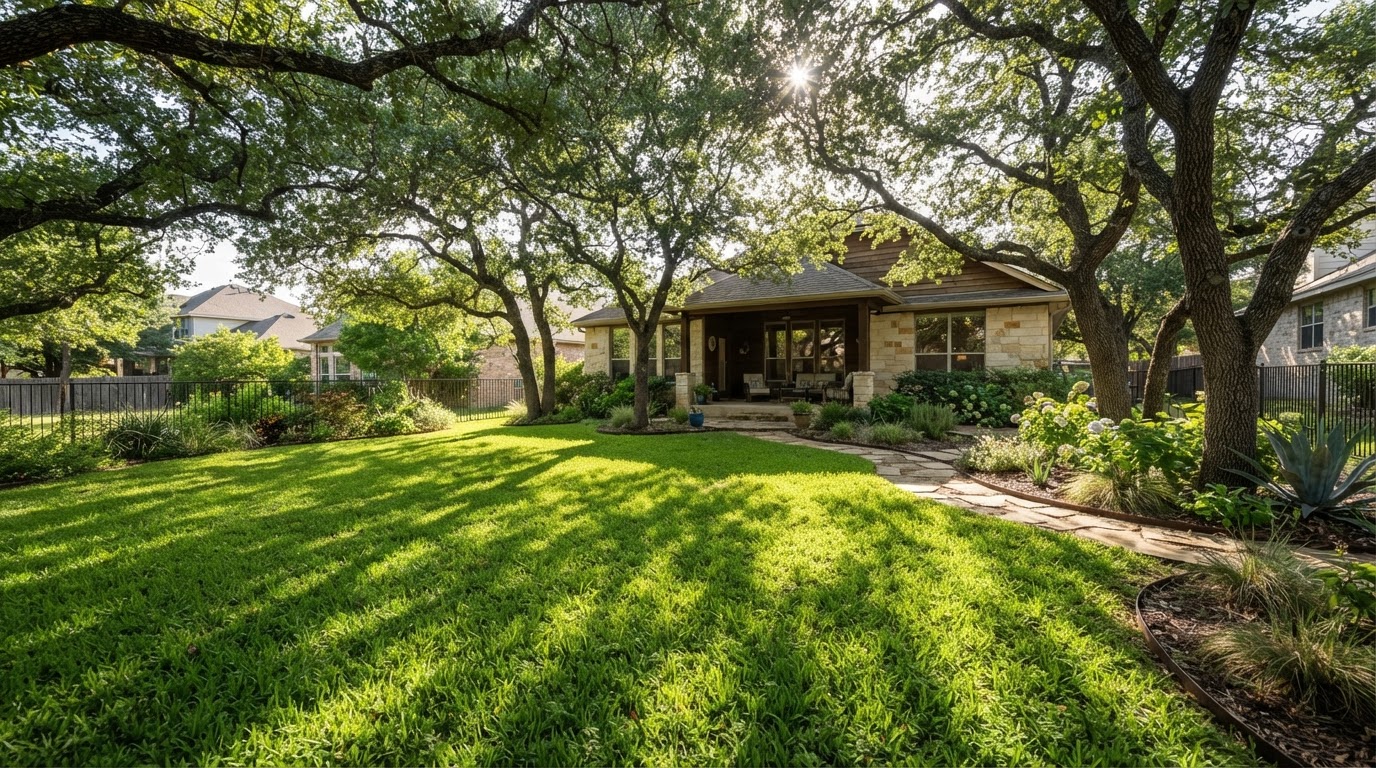
Best Grass for Shade Spring
The most suitable grass for a shaded yard depends on how much sunlight reaches the area, the selected species and cultivar, the competing tree roots, the soil and moisture conditions, the foot traffic, and the maintenance. Some St. Augustinegrass and zoysiagrass varieties are commonly considered for partial-shade conditions, while Bermudagrass generally requires substantial sunlight — Heritage helps Spring homeowners evaluate the real conditions rather than assume one grass fits every shaded yard.
Shade-Tolerant Turfgrass Choices Near Spring
Three warm-season grasses are commonly compared for Spring-area lawns, and each handles shade differently. The right choice follows the actual sunlight, the soil, and the use rather than a universal shade ranking.
St. Augustinegrass
- Common residential use
- Cultivar differences in shade tolerance
- Partial-shade suitability
- Water and maintenance considerations
Zoysiagrass
- Cultivar-specific shade tolerance
- Appearance and density
- Growth characteristics
- Establishment and maintenance considerations
Bermudagrass
- Substantial sunlight requirements
- Turf density in full sun
- High-use properties
- Potential limitations in shade
When Shade Is Too Heavy for Healthy Grass in Spring
Where the shade is too heavy for healthy turf, practical alternatives usually perform better than grass that thins and needs constant repair:
Understanding Shaded Lawn Conditions Near Spring
A shaded lawn thins for a combination of reasons — the direct sunlight, the filtered light, the tree canopy, the root competition, the moisture, the drainage, the air movement, the mowing practices, the foot traffic, and the species and cultivar selection all interact. Installing new sod without correcting the unsuitable conditions may lead to repeated turf decline, which is why the conditions are evaluated before the grass is chosen rather than after it fails.
Evaluating Grass for Your Shaded Yard in Spring
A shaded lawn decision follows a sequence — observing the real sunlight, identifying the current grass, considering the tree roots, reviewing the irrigation and drainage, determining the intended use, comparing suitable cultivars, and weighing non-turf alternatives where the shade is too heavy. No universal sunlight-hour guarantees are made unless supported by a source specific to the grass variety.
Turfgrass guidance here draws on Texas A&M AgriLife Extension publications on shade turfgrass, turfgrass selection for Texas, and St. Augustinegrass management. These sources inform plant suitability and educational guidance — they do not guarantee any turf will thrive in every shaded yard.
Best Grass for Shade Questions in Spring
Choosing Turf for Shaded Properties Near Spring
Tell us about your shaded lawn — the property address, the current grass, the daily sunlight the area receives, the tree and soil conditions, and a photo taken safely from the ground — and we review each inquiry by the actual site conditions before discussing a shade-tolerant lawn or a non-turf alternative.
Discuss Your Shaded Lawn
Required: name, contact details, project address, desired timeline, and a photo you can take safely from the ground.