
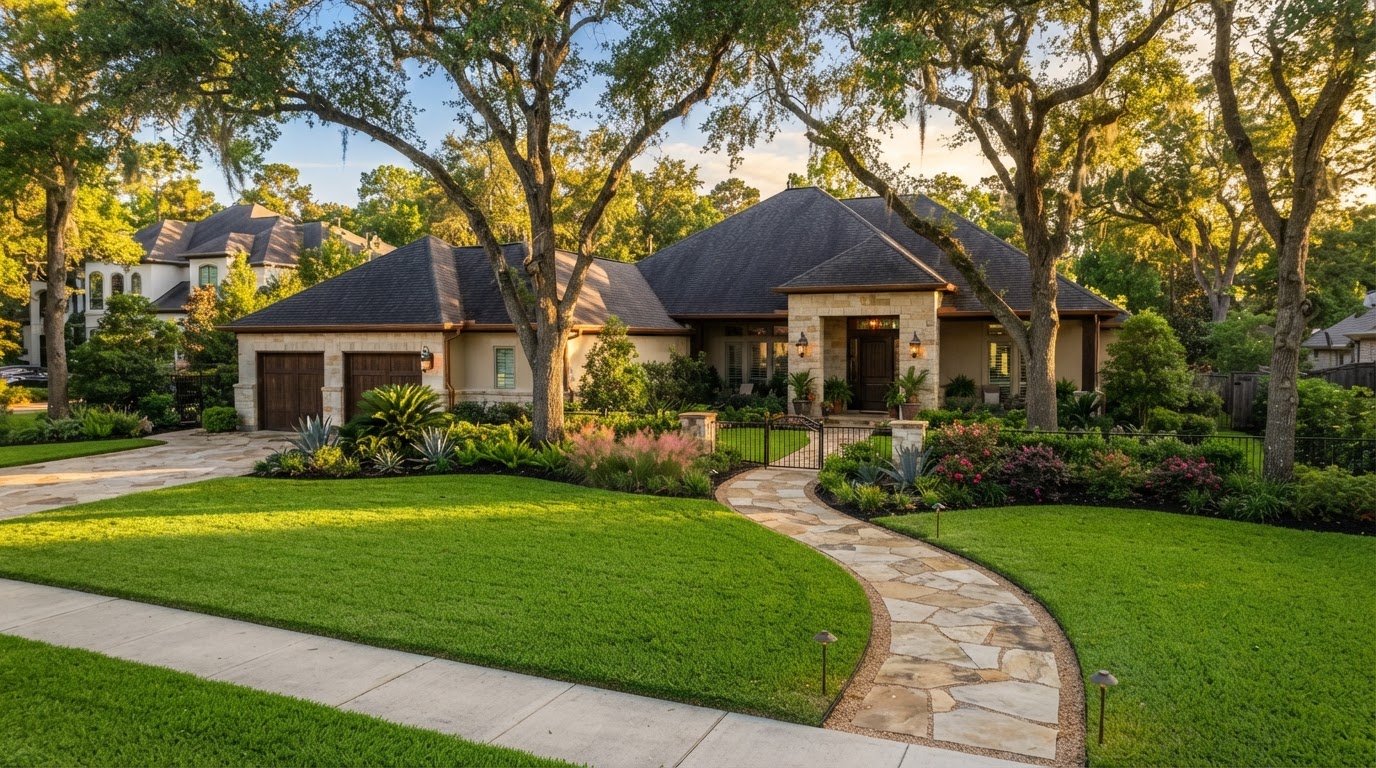
Native & Drought-Tolerant Texas Landscaping Spring
Native and drought-tolerant landscaping is about choosing plants suited to the actual conditions of a Spring-area property — not about a zero-water yard. Heritage designs and installs water-conscious landscapes that still need establishment care, appropriate maintenance, and the right plant matched to the right spot.
Choosing Drought-Tolerant Plants Near Spring
Drought-tolerant and native don't mean zero watering or no maintenance — they mean the plants are better matched to the region's conditions, which can reduce unnecessary water and replacement once they're established.
Native Plants Versus Drought-Tolerant Landscaping in Spring
Native plants
Species indigenous to a defined geographic region — adapted to the local climate, but still requiring appropriate siting, soil, and establishment care.
Drought-tolerant plants
Plants capable of handling reduced water availability under suitable conditions — not necessarily native, and not maintenance-free.
Low-maintenance landscaping
A design and upkeep goal that may incorporate native and non-native plants — the maintenance level follows matching the plant to the site, not the label.
Appropriate plant categories for a Spring-area water-conscious landscape:
Specific plant selections follow reliable Texas horticultural guidance matched to the actual site — not a single universal plant list.
Planning a Water-Conscious Landscape Near Spring
A water-conscious landscape is planned around the principle of grouping plants with compatible needs — so each zone gets the water it actually requires rather than one schedule applied to every plant on the property.
Establishing Drought-Tolerant Landscaping in Spring
The establishment period is when a drought-tolerant landscape needs the most attention — new plants need consistent moisture to root in, and the watering is adjusted down only after they're settled.
Why New Drought-Tolerant Plants Still Need Care Near Spring
A newly installed plant has a limited root system and needs consistent moisture to establish — regardless of how drought-tolerant it is once mature. Drought tolerance describes a mature plant's performance under reduced water, not its needs during establishment. New plantings are watered through the rooting period, and the irrigation is adjusted down only after the plants are settled in and the season supports it.
What Shapes a Native Landscape Estimate
- Landscape area to be planted
- Plant sizes and quantities
- Existing plant removal where needed
- Soil preparation
- Mulch and edging
- Irrigation changes for efficient watering
- Access for installation
- Overall design complexity
No drought-proof guarantees, zero-irrigation promises, or permanent plant-survival claims. Estimates follow the actual landscape and plant selections.
Native & Drought-Tolerant Landscaping Questions in Spring
Plan Native Texas Landscaping Near Spring
Tell us about your landscape goals — the current landscaping, sunlight conditions, irrigation availability, and maintenance preferences — along with photos taken safely from the ground. We review each inquiry by the actual site conditions before discussing an appropriate water-conscious landscape plan.
Request a Native Landscape Estimate
Required: name, contact details, project address, desired timeline, and a photo you can take safely from the ground.