
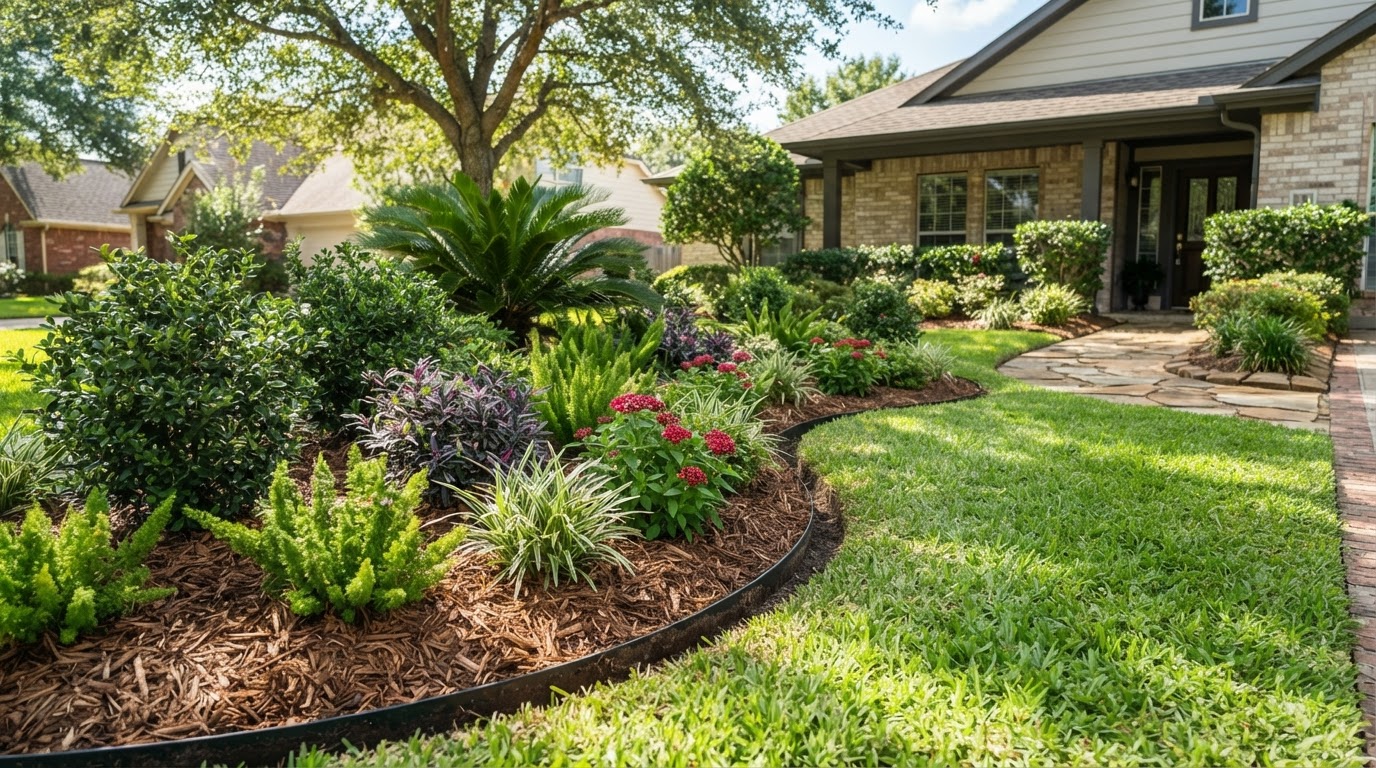
Landscape Bed Maintenance Spring
Landscape bed maintenance keeps planted areas tidy and healthy — addressing weeds, debris, bed boundaries, and the changing needs of landscape plants through the year. Rather than treating every bed the same, care follows the beds on your property: their size, plantings, sun and shade, irrigation, and current condition. Ongoing upkeep is distinct from new installation, mulch-only service, and shrub trimming, and the scope is built around what each bed actually needs rather than a generic bed service applied everywhere.
Landscape Bed Maintenance for Spring Properties
Bed maintenance combines several tasks that keep planted areas looking cared for. Each follows the bed's actual conditions and the plants growing in it rather than a single routine applied to every landscape.
Bed Cleanup and Debris Removal
Leaves, fallen material, and other routine debris are cleared from planted areas to keep beds tidy and reduce conditions that harbor pests or disease. Cleanup follows the bed's condition and the season rather than a fixed schedule applied to every property.
Weed Management
Unwanted vegetation is identified and managed with an approach that fits the weeds present and the bed's conditions. Any herbicide use requires verified authorization rather than being assumed part of routine maintenance — the method follows what's actually growing and the applicable credentials.
Bed Edge Maintenance
Visual and functional boundaries between lawns, walkways, and planted beds are kept clean and defined. Edge maintenance follows the bed's layout and existing materials, done carefully to avoid damaging plants, irrigation components, or established edging.
Mulch and Pine Straw Considerations
Bed maintenance relates to the groundcover material on the beds — its condition, coverage, and depth. Mulch and pine straw installation are separate services, but their condition is monitored as part of ongoing bed upkeep so the material continues to do its job.
Plant Condition Monitoring
Signs of stress, overgrowth, irrigation issues, crowding, or poor drainage are observed during bed care. Plant disease isn't diagnosed from photographs alone — concerns are noted and assessed so the response fits what's actually affecting the plants.
Planning Landscape Bed Maintenance Near Spring
Bed maintenance is planned around the beds on your property and what's growing in them. The factors below shape the scope, frequency, and approach for each bed.
Different Beds Require Different Care
Foundation Beds
Beds along the home's foundation, often with shrubs and accent plantings, needing edge care and debris removal.
Shrub Borders
Linear shrub plantings that need weed management and monitoring of growth and spacing over time.
Flower Beds
Seasonal color and perennial beds needing more frequent attention to flowers, weeds, and bed edges.
Shade Beds
Beds under heavy canopy with different moisture, debris, and weed conditions than full-sun beds.
Tree-Ring Planting Areas
Planting rings around trees needing careful edge and root-zone care to protect the tree.
Larger Landscaped Sections
Bigger bed areas that take more time per visit and may need different access and planning.
Protecting Established Plants
Care around roots, trunks, and delicate plant material is done with attention to the plants already established in the bed. Excessive mulch piled against tree trunks or plant crowns — often called mulch volcanoes — can harm plants over time, so mulch depth and placement follow what suits the plant rather than piling material against the trunk. Edging and weeding are done carefully to avoid damaging surface roots, irrigation components, or low plantings.
Maintaining Landscape Beds Throughout the Year in Spring
Beds change through the year, and maintenance follows those changes. The factors below show what shifts and what shapes a bed-maintenance estimate.
Bed Maintenance Versus Bed Renovation
Routine upkeep keeps existing beds tidy and healthy through ongoing care. It's distinct from full bed redesign, plant replacement, major regrading, drainage construction, or extensive landscape restoration — each of which is a separate project scoped on its own. Maintenance addresses the ongoing condition; larger renovation is planned separately when it's needed.
What Affects Landscape Bed Maintenance Cost Near Spring?
- Bed area and square footage
- Plant density and type
- Current bed condition
- Weed and debris level
- Existing mulch or materials
- Site access
- Maintenance frequency
- Additional services where appropriate
Because these depend on the specific beds, an on-site review produces the most useful estimate rather than a flat per-bed rate. No bed-maintenance plan guarantees a particular result — plant health depends on conditions and ongoing care.
Landscape Bed Maintenance Questions in Spring
Discuss Landscape Bed Maintenance Near Spring
Tell us about your beds — their size, plantings, sun and shade, and current condition — along with a few photos taken safely from the ground. We review each inquiry by location and scope before discussing an appropriate maintenance arrangement.
Related Services
- Lawn Care
- Lawn Maintenance Plans
- Front Yard Landscaping
- Landscape Installation
- Mulch Installation
- Pine Straw Installation
- Shrub & Hedge Trimming
- Seasonal Color & Flower Installation
- Mulch vs. Pine Straw vs. Rock
Request Landscape Bed Maintenance Information
Required: name, contact details, project address, desired timeline, and a photo you can take safely from the ground.