
Pine Straw Installation Spring
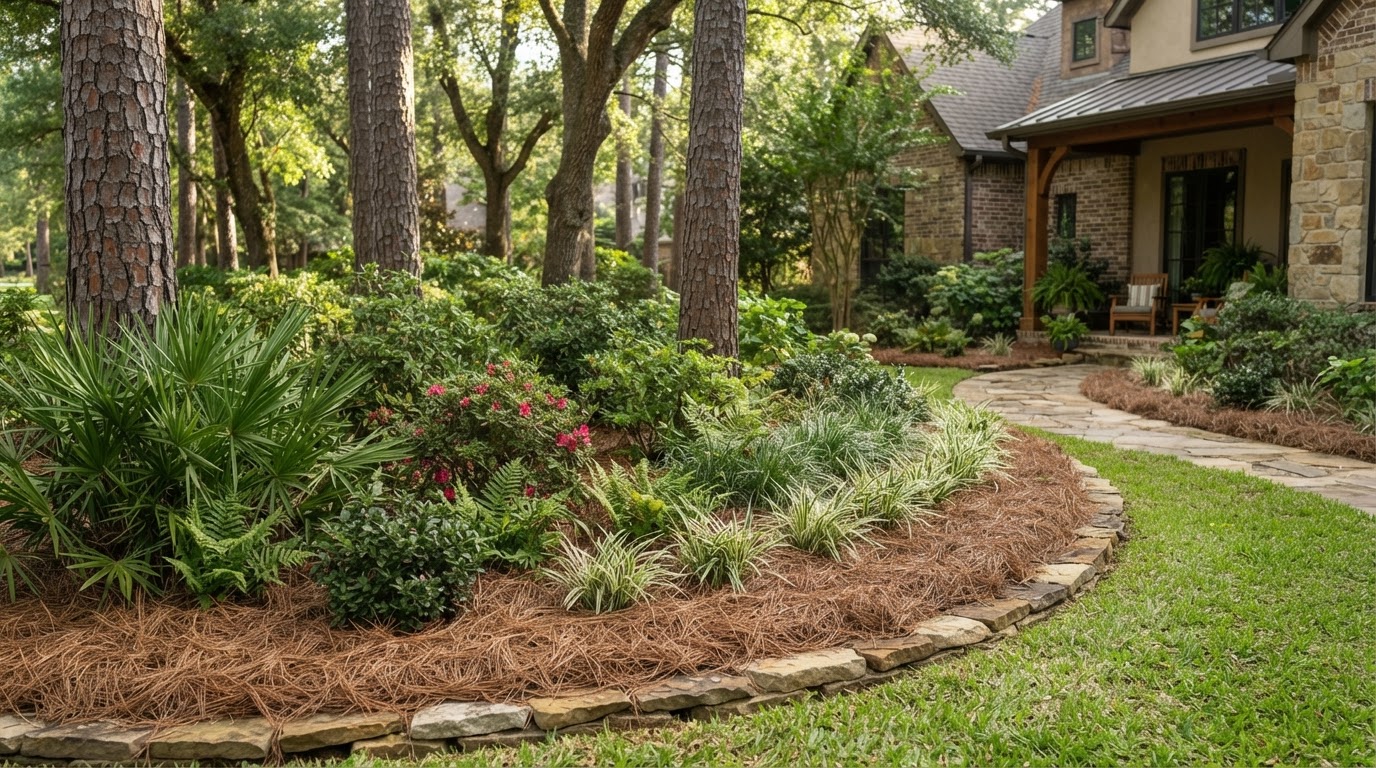
Pine straw is a natural groundcover material used in suitable planting beds to help conserve moisture, reduce splash, and give beds a soft, textured, natural appearance. It's one option among several groundcover materials — not a universal choice for every bed — and its suitability depends on the plants, exposure, drainage, and the look you want. Pine straw isn't automatically superior to wood mulch; the right material follows the bed's conditions rather than a single default applied everywhere.
Pine Straw for Landscape Beds in Spring
Pine straw suits some beds better than others. The applications below show where it fits and how it compares to other groundcover materials.
Shrub and Foundation Beds
Pine straw can serve as a decorative surface around suitable established shrubs and foundation plantings, where its texture complements the plants and the bed's layout. The material is selected to suit the bed's conditions rather than applied as a default to every planting area.
Tree and Shaded Landscape Areas
Pine straw is often a good fit under tree canopies and in larger shaded beds, where it settles around roots and complements the natural setting. Not every shaded landscape should use pine straw — the choice follows the bed's plants, drainage, and design rather than an assumption about shade.
Natural Landscape Appearance
Texture, color, and bed design all influence the finished look. Pine straw offers a soft, needle-like surface that reads as natural and layered, which suits some landscapes better than a denser wood mulch. The appearance follows the bed and the look you want.
Pine Straw Versus Wood Mulch
Pine straw and wood mulch differ in appearance, how they settle, their refresh needs, and how they interact with the plants beneath. Pine straw forms a lighter layer that can interlock on gentle slopes; wood mulch forms a denser, more uniform surface. Each suits different beds — neither is universally better.
Planning Pine Straw Installation Near Spring
A bed is assessed before pine straw goes in so the material suits what's actually growing there. The factors below shape how the installation is planned.
Preparing Existing Planting Beds
Preparation includes clearing debris, reviewing bed edges, and assessing the condition of any existing material. Old groundcover that has broken down evenly may be refreshed; material that has built up or become matted may be cleared first. The approach follows the bed's current condition so the new layer goes down on a suitable surface.
Protecting Trees and Established Plants
Pine straw is placed with attention to the plants already in the bed, avoiding unnecessary buildup against trunks or plant crowns. As with any groundcover, piling material against the bark can trap moisture and encourage problems over time. The layer is kept even over the root zone while the trunks and crowns stay clear.
Pine Straw Maintenance for Spring Properties
Pine straw settles, shifts, and breaks down over time. The factors below show what changes and what shapes an installation estimate.
When Pine Straw May Not Be Suitable
Pine straw isn't right for every bed. Suitability depends on the landscape design, exposure, property conditions, maintenance goals, and any applicable restrictions. Beds with heavy runoff, certain plantings, or specific design goals may be better served by wood mulch or another groundcover. The choice is made for the bed in front of us rather than as a universal recommendation.
What Affects Pine Straw Installation Cost?
- Bed dimensions and area
- Material quantity required
- Existing bed condition
- Preparation and debris removal
- Site access
- Delivery
- Cleanup and finishing
Because these depend on the specific beds, an on-site review produces the most useful number rather than a flat per-bale rate. No pine straw installation guarantees a permanent appearance — the material settles and is refreshed over time.
Pine Straw Installation Questions in Spring
Discuss Pine Straw Installation Near Spring
Tell us about your beds — their size, what's planted in them, sun and shade, and the current groundcover — along with a few photos taken safely from the ground. We review each inquiry by location and scope before discussing whether pine straw suits the bed and planning an appropriate installation.
Related Services
- Mulch Installation
- Landscape Bed Maintenance
- Front Yard Landscaping
- Landscape Installation
- Mulch vs. Pine Straw vs. Rock
Request a Pine Straw Installation Estimate
Required: name, contact details, project address, desired timeline, and a photo you can take safely from the ground.