
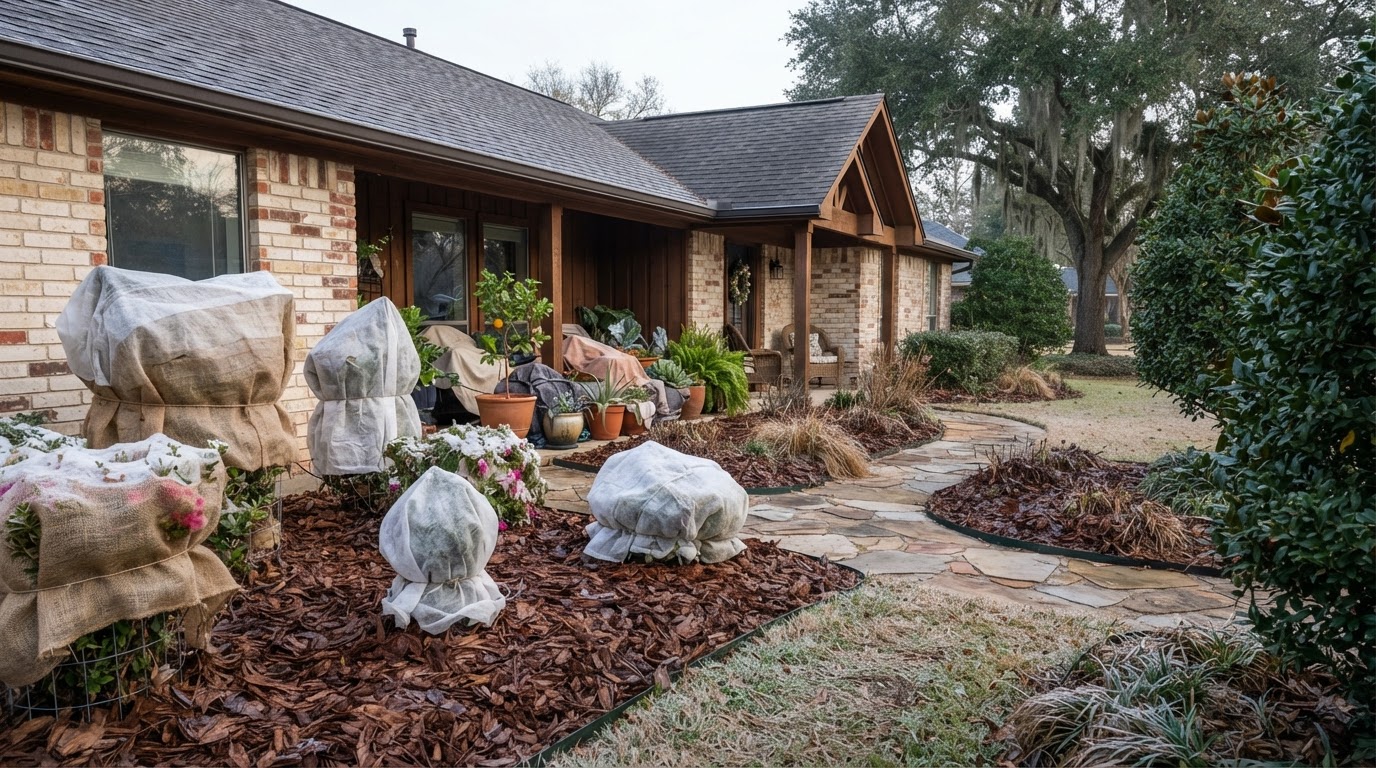
Protecting Plants Before a Hard Freeze Spring
Cold preparation depends on the plant species, the maturity, the exposure, the establishment, the forecast temperature, the duration of freezing conditions, and the preceding weather. Practical steps — identifying cold-sensitive plants, reviewing the forecast, covering vulnerable growth, protecting the root zone, and planning a careful post-freeze assessment — help reduce avoidable damage, but no technique guarantees survival. Heritage helps Spring homeowners prepare landscapes before a freeze and recover afterward.
Identifying Freeze-Sensitive Plants Near Spring
Not every plant in a Spring-area landscape faces the same risk before a freeze. Tropical and subtropical ornamentals, young or newly installed shrubs, container plantings, and recently established beds are generally more vulnerable than mature, cold-tolerant landscaping. The protection follows the actual plants on the property rather than a blanket treatment for everything, and the difference between a brief frost, a short freeze, and a prolonged hard freeze — along with the wind exposure — changes what each plant can handle. Not all palms and not all native plants respond identically, so the assessment is made plant by plant.
Frost, Brief Freezes and Hard Freezes in Spring
A light frost can damage tender new growth without harming established wood; a brief freeze can injure exposed foliage and cold-sensitive species; and a prolonged hard freeze — especially with wind — can damage or kill plants that a shorter cold event would have survived. The severity depends on the temperature, the duration, the wind, and the plant's condition rather than a single universal damage threshold, so the protection is matched to the actual forecast.
No technique guarantees survival. Covering, watering, and root-zone protection reduce avoidable damage, but a severe enough event can still injure or kill cold-sensitive plants regardless of preparation, and recovery or replacement may follow after the weather passes.
Practical Freeze Preparation for Spring-Area Landscapes
The practical steps below cover the most useful preparation before freezing weather. Each step is matched to the plant and the forecast rather than applied uniformly, and the qualifications matter as much as the steps themselves — covers need ventilation, plastic needs to stay off the foliage, and protection is removed or adjusted as temperatures rise.
Breathable frost cloth can stay on longer than plastic, which traps condensation and heat; covers come off or are vented as the sun warms the plants so the trapped air does not scorch the foliage.
Moist soil holds more warmth than dry soil, but overwatering a saturated bed can stress roots; the watering is timed ahead of the cold and matched to the soil and the drainage.
Improvised heating, unattended electrical devices, and unsafe heat sources are not recommended; protection relies on appropriate covers, mulch, and sheltered placement rather than makeshift heating.
A simple pre-freeze checklist helps: identify the cold-sensitive plants, review the forecast, cover vulnerable growth with breathable fabric kept off the foliage, mulch the root zone, water ahead of the cold where the soil is dry and well-drained, move manageable containers to shelter, and plan a patient post-freeze assessment rather than an immediate pruning.
Assessing Plant Conditions After Freezing Weather
Visible damage after a freeze often develops over time, and the true extent of injury is not always clear until new growth begins. Premature pruning can remove tissue that is still alive and can stimulate tender new growth that a later cold event would damage again, so the recovery is patient rather than rushed. The steps below help a homeowner assess conditions without diagnosing the plant from a photograph alone.
Where damage is severe or the plant's recovery is unclear, a professional assessment can identify what can be saved and what may need replacement. Heritage can help with freeze-damaged plant replacement and with rebuilding a more cold-resilient landscape, but a photograph alone is not a definitive diagnosis — the plant's actual condition on the ground is what guides the recommendation.
Hard Freeze Plant Protection Questions in Spring
Planning a More Resilient Landscape Near Spring
Cold preparation connects to thoughtful plant selection, drainage, establishment, and ongoing maintenance. Tell us about your landscape — the property address, the plants you are concerned about, the existing conditions, and a photo taken safely from the ground — and we review each inquiry by the actual site before discussing freeze preparation, plant replacement, or a more resilient redesign.
Official Starting Source
Request an Estimate
Required: name, contact details, project address, desired timeline, and a photo you can take safely from the ground.