
Mulch vs. Pine Straw vs. Rock Spring
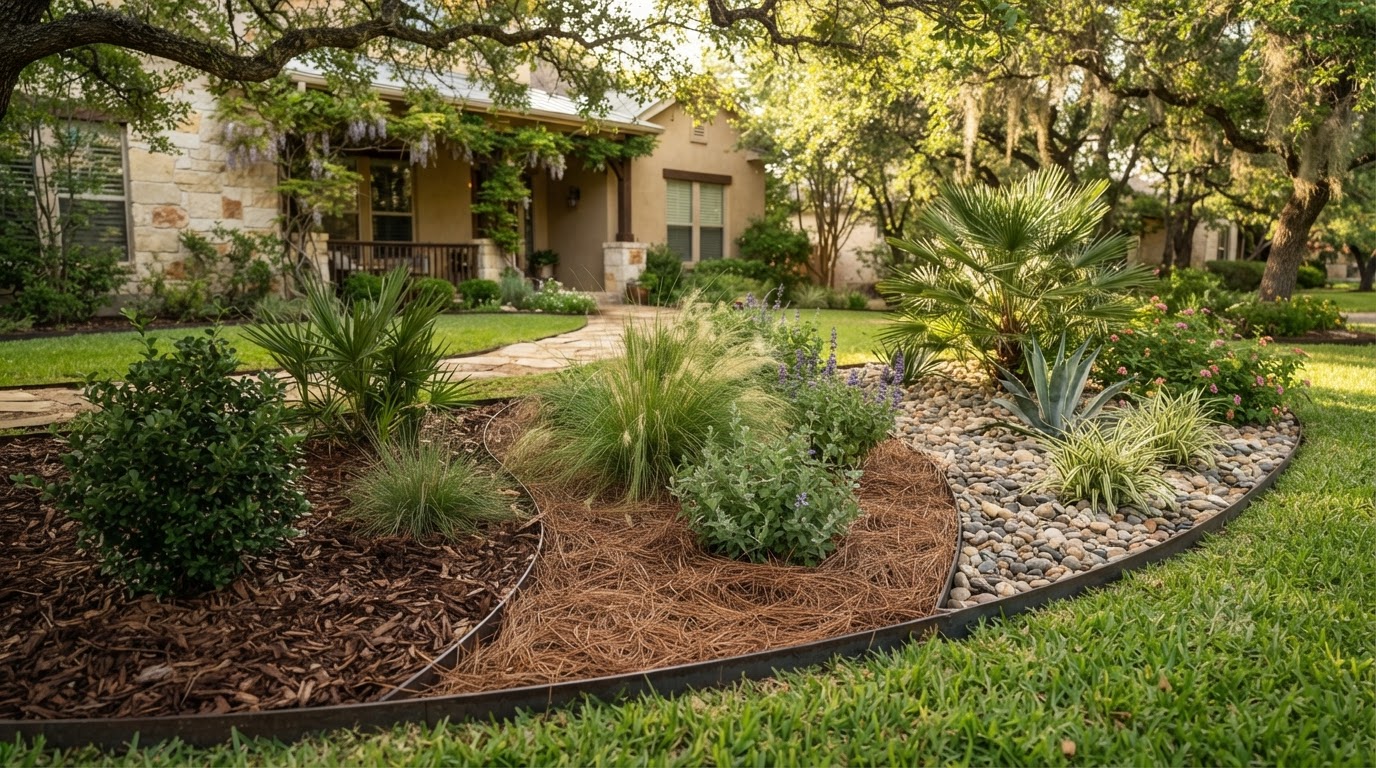
Three common landscape-bed materials each suit different conditions. Organic mulch is a versatile, renewable bed covering with soil-protection benefits; pine straw is a distinct organic option with a soft, layered, natural appearance; and decorative rock is a durable mineral material suited to selected designs but with different heat, installation, and maintenance implications. The right choice follows the plants, the soil, the slope, the drainage, the appearance, and the upkeep the homeowner can sustain — not a single best material for every bed.
Mulch, Pine Straw and Rock for Spring-Area Landscaping
The comparison below covers the practical differences among the three materials. Product variations and placement change these outcomes, so the table is a starting point rather than a rigid rule — the actual bed, the plants, and the drainage determine which material performs best on a given property.
Pine straw does not automatically acidify the soil around every plant. Its effect on established beds is generally small and slow, and where a plant needs a specific soil condition, the soil is tested and addressed directly rather than assumed from the mulch choice. The material is selected for the appearance, the slope, and the maintenance it provides — not as an automatic soil amendment.
Selecting the Right Bed Covering Near Spring
The right material follows the actual conditions on the property. Sun exposure and heat, tree roots and trunk protection, the existing soil, slopes and runoff, drainage patterns, the plant selection and irrigation, foot traffic and pet access, and any HOA design rules all shape which covering performs best. Landscape rock does not automatically resolve standing water or poor grading, and impermeable barriers or poorly drained installations are not universal solutions — the drainage is evaluated alongside the material rather than assumed fixed by the covering alone.
Landscape Bed Installation and Maintenance in Spring
A bed covering performs best when the bed is prepared first. Site cleanup, weed removal, and edge definition come before the material; the depth follows the product and the plant conditions; and the material is kept away from trunks and crowns so it does not trap moisture against the bark. Drainage and runoff are managed alongside the covering, and every material — even rock — needs periodic cleanup, replenishment, or repositioning rather than a one-time install.
Estimate factors for a bed-material project
No local per-square-foot prices are published here. The estimate follows the actual bed area, the material type and quantity, the existing material removal, the access, the edging, the weed pressure, the site preparation, and any drainage improvements — rather than a fabricated local average.
Mulch, Pine Straw and Rock Questions in Spring
Planning Landscape Bed Improvements Near Spring
The material should complement the overall landscape design, the plant health, the appearance, and the maintenance the homeowner can sustain. Tell us about your property — the bed areas, the existing conditions, the plants, and a photo taken safely from the ground — and we review each inquiry by the actual site before discussing mulch, pine straw, rock, or a combination suited to the conditions.
Official Starting Sources
Tell Us About Your Property
Required: name, contact details, project address, desired timeline, and a photo you can take safely from the ground.