
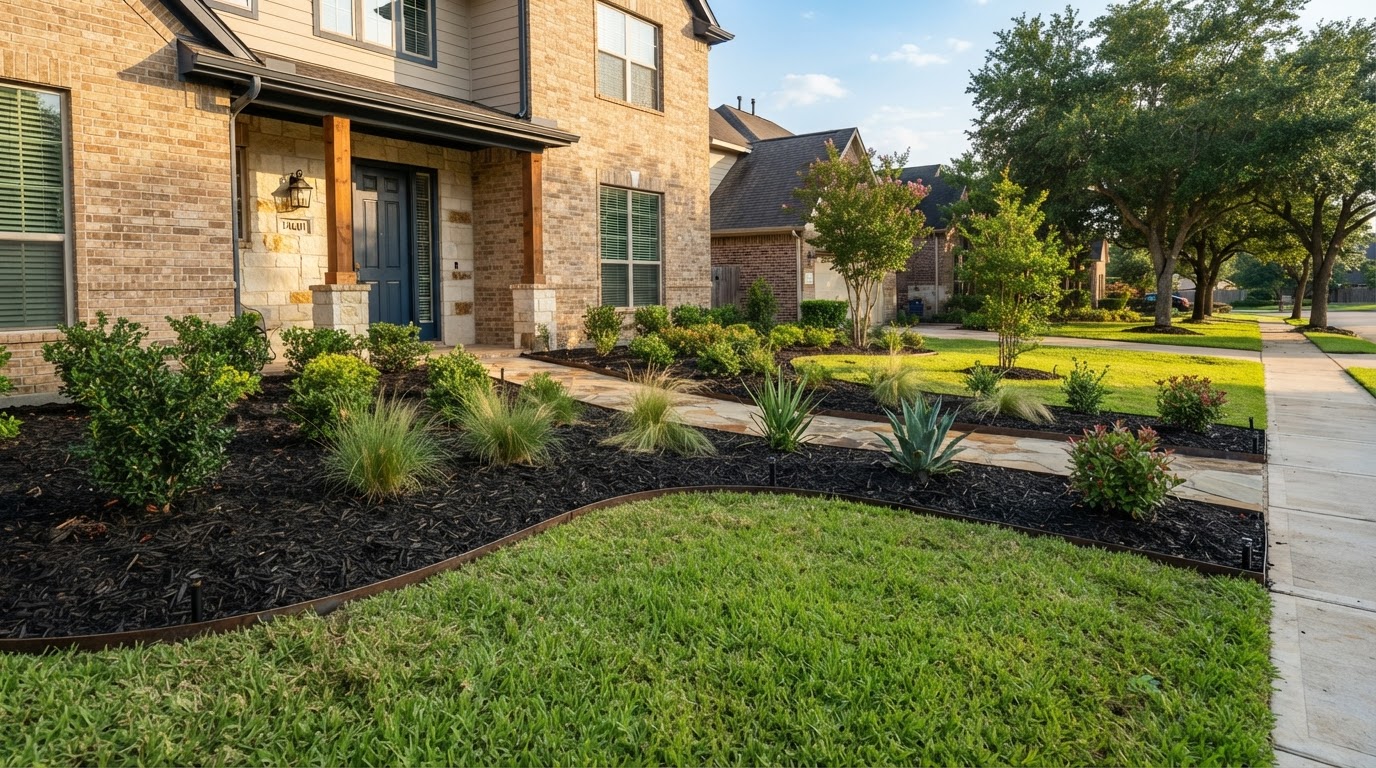
Landscape Installation Spring
Landscape installation is the process of preparing and implementing the landscape improvements you've planned — setting planting beds, establishing lawn areas, adding mulch and finishing elements, and coordinating the work around your property. A project may include all of these or only the parts your yard actually needs, depending on the plan and the site.
Residential Landscape Installation in Spring
Installation turns a plan into a finished landscape. The categories below cover the work most often involved, though the scope for any property is built from the specific plan and site — not a fixed bundle applied to every yard.
Planting Beds & Plant Installation
Plant selection and placement, site preparation, proper spacing, integration with existing landscape, mulch or suitable bed materials, and establishment considerations planned around each area.
Sod & Lawn Area Installation
Appropriate turf selection for the site, soil preparation, access, watering, and establishment. Turf type follows sun, shade, and intended use rather than a single default grass.
Landscape Borders & Finishing Elements
Bed edging, decorative materials, and clean visual transitions between lawn, beds, and hardscape that finish the installation and help the landscape read as one space.
Installation Around Existing Features
Working around driveways, walkways, patios, trees, and established planting areas — protecting what's worth keeping rather than clearing the site by default.
Installation doesn't imply unrestricted excavation or construction capability. Work around utilities, irrigation, drainage, and existing structures is reviewed against the site, and any structural, electrical, or plumbing scope that requires qualified trades is identified during planning rather than assumed.
Planning Landscape Installation Near Spring
A sound installation moves through review, preparation, and implementation in the right order. Skipping preparation is the most common reason a new landscape fails early, so the process accounts for conditions before plants or sod go in.
Review the Layout
Confirm the intended layout against the actual site — measurements, existing features, and access.
Identify Utilities & Irrigation
Locate existing utilities and irrigation so installation avoids damage and coordinates coverage.
Prepare the Site
Grade, amend soil, remove old material, and prepare planting areas before plants or sod go in.
Install & Establish
Set plantings, establish lawn areas, add mulch and finishing elements, and coordinate establishment care.
Understanding Site Preparation Needs
Preparation varies by existing landscape and project scope. A bed refresh may need little more than soil amendment and mulch, while a lawn replacement may require grading, old sod removal, and irrigation adjustments. The preparation follows the site, not a standard checklist applied to every project.
Protecting Existing Landscape Features
Established trees, healthy plants, and existing structures are protected during installation where possible. Root zones, trunks, and adjacent hardscape are accounted for in the work plan. Construction can't guarantee zero disturbance, but planning reduces it and keeps what's already working in place.
What to Consider After Landscape Installation in Spring
The first months after installation matter as much as the work itself. Watering, plant monitoring, turf establishment, drainage, mulch, and seasonal care all influence whether the landscape matures well. There is no single universal irrigation schedule — establishment needs change with turf type, sun, shade, rainfall, and season.
Establishment Care
- Watering matched to turf type, sun, and weather
- Monitoring new plantings for stress
- Turf establishment and fill-in
- Drainage observation during rain
- Mulch renewal and bed settling
- Seasonal care as growth cycles change
Landscape Installation Estimate Factors
- Property size and installation area
- Access for equipment and crews
- Material selection and plant quantity
- Removal of existing materials
- Site preparation and soil work
- Drainage needs and irrigation coordination
- Disposal of old material
- Project complexity and sequencing
An estimate reflects the specific plan and site rather than a fixed material price, which is why an on-site review produces the most useful number.
Landscape Installation Questions Near Spring
Plan Your Landscape Installation in Spring
Share your property address, the installation you have in mind, and a few photos taken safely from the ground. We review each inquiry by location and scope before discussing assessment and estimate scheduling.
Related Services
- Landscape Design
- Custom Landscape Design & Build
- Front Yard Landscaping
- Backyard Landscaping & Makeovers
- Sod Installation
- Irrigation System Installation
- Drainage Solutions & French Drains
Request a Landscape Installation Estimate
Required: name, contact details, project address, desired timeline, and a photo you can take safely from the ground.