
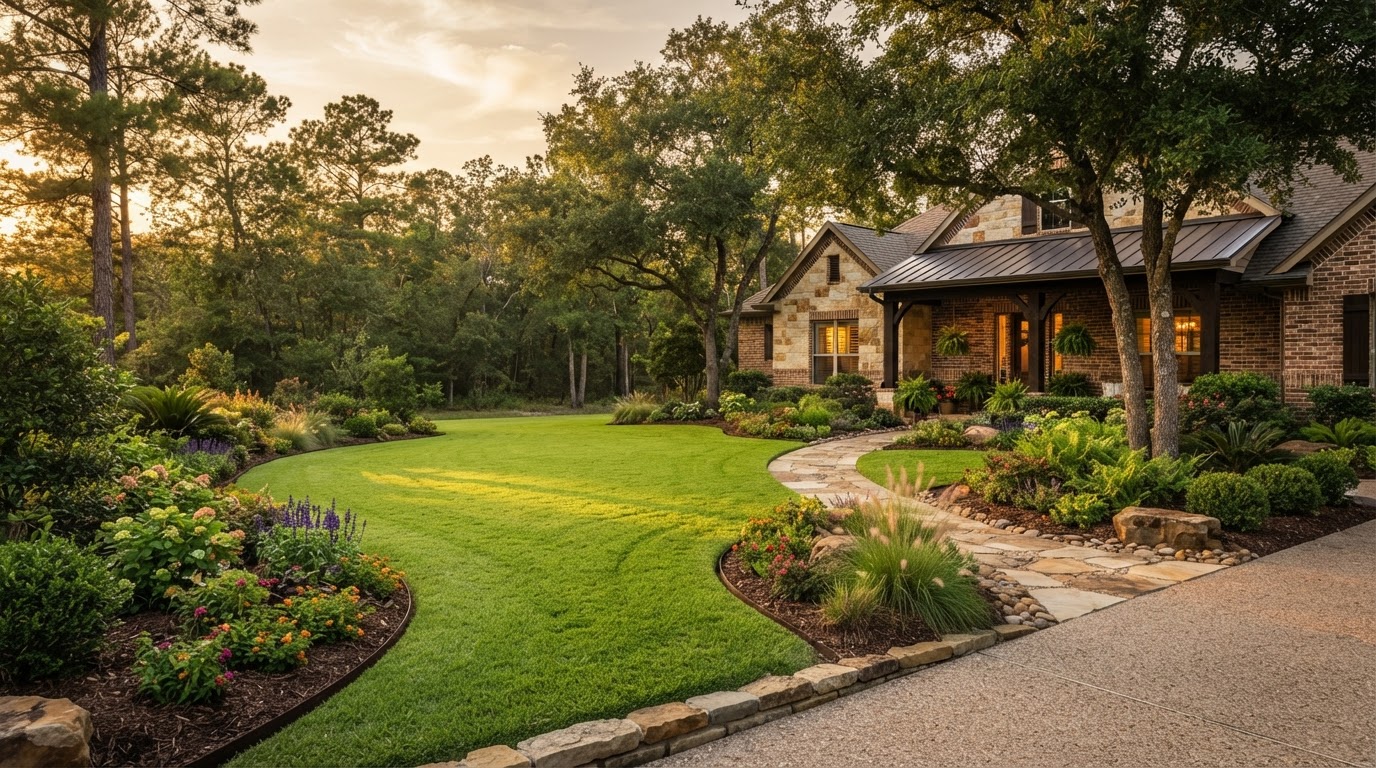
Year-Round Lawn Care Calendar Spring
Warm-season turf management changes with the grass species and cultivar, the rainfall, the temperature, the soil, the shade, the irrigation, the lawn's use, the growth stage, and the water-provider restrictions. The four-season framework below is an adaptable guide — weather does not follow identical dates each year, and no calendar can promise perfect turf or prescribe one universal fertilizer and watering schedule. Heritage helps Spring and nearby Woodlands homeowners plan realistic, season-by-season lawn care.
Spring-Season Lawn Care Around Spring, Texas
As warm-season turf breaks dormancy, the spring season is for assessing the lawn after winter, checking for freeze damage, monitoring green-up, reviewing the mower setup, inspecting irrigation, and identifying drainage concerns. Treatments and timing depend on the grass's actual condition and the weather rather than a fixed date, and any regulated treatment is handled by a properly qualified applicator. The spring growing season and Spring, Texas the city are both relevant — but the care follows the grass, not the calendar.
Summer Lawn Care Near Spring and The Woodlands
Summer brings active growth, heat, and moisture stress. Mowing becomes growth-responsive — more frequent when the grass is growing fast, eased back when heat or drought slow it — and the irrigation is evaluated against the actual rainfall and the property's water-provider restrictions. No universal number of watering days or minutes is recommended here, because the right schedule follows the grass type, the soil, the shade, and the provider's current rules rather than a fixed summer routine. Shaded areas, standing water, and signs that warrant closer inspection are watched through the season.
Fall and Winter Lawn Planning for Spring-Area Properties
As growth slows in the fall, the focus shifts to cleanup, bed maintenance, and a drainage and irrigation review before the cooler months. Winter brings dormancy or limited warm-season growth, freeze preparation, reduced mowing, and planning for the next active period. A winter lawn may look different depending on the grass species, the seasonal conditions, and the past maintenance, so the appearance is read in context rather than compared to a summer standard.
Fall
- Growth slowing
- Leaf and pine needle cleanup
- Bed maintenance
- Drainage and irrigation review
- Seasonal planting considerations
- Monitoring disease-like symptoms without assuming diagnosis
Winter
- Dormancy or limited warm-season turf growth
- Freeze preparation
- Reduced mowing where growth has slowed
- Avoiding unnecessary irrigation
- Protecting vulnerable plants
- Planning improvements before the next active growth period
A Practical Southeast Texas Lawn Care Calendar
The table below summarizes the four-season framework. It is an adaptable planning guide — not a provider-approved watering schedule or a mandatory treatment calendar — and the actual timing follows the grass, the weather, and the property's current conditions rather than fixed dates.
Year-Round Lawn Care Calendar Questions in Spring
Planning Year-Round Lawn Maintenance Near Spring
A lawn care plan varies by property, service scope, grass type, site access, and seasonal growth. Documenting recurring problems and sharing photos, property details, and the desired maintenance frequency helps the plan fit the actual yard. Tell us about your lawn — the address, the grass type, the current condition, and a photo taken safely from the ground — and we review each inquiry by the actual site before discussing a recurring maintenance plan.
Primary Sources
- Texas A&M AgriLife Extension — St. Augustinegrass Home Lawn Maintenance Calendar
- Texas A&M AgriLife Extension — St. Augustinegrass Lawn Management
- Woodlands Water — Defined Irrigation Schedule
- Woodlands Water — Lawn Care Calendar
Woodlands Water requirements apply only within its actual service area and do not automatically extend to all Spring, Harris County, or Montgomery County properties.
Tell Us About Your Property
Required: name, contact details, project address, desired timeline, and a photo you can take safely from the ground.